


In today’s fast-paced and stressful world, many people are searching for effective ways to manage their stress and anxiety. One practice that has gained popularity in recent years is yoga. Yoga is an ancient practice that combines physical postures, breathwork, meditation, and mindfulness to promote overall well-being. In this blog post, we will explore how yoga can help with stress and anxiety, the benefits of practicing yoga for stress reduction, the science behind yoga’s calming effects on the mind and body, the role of breathwork in yoga, the different types of yoga and how they can help with stress and anxiety, yoga poses for stress and anxiety relief, incorporating meditation and mindfulness into your yoga practice, using yoga as a complementary therapy for managing stress and anxiety disorders, tips for maintaining a consistent yoga practice, and the importance of finding the right yoga teacher and studio for your needs.
What is Yoga and How Does it Help with Stress and Anxiety?
Yoga is a holistic practice that originated in ancient India thousands of years ago. It combines physical postures (asanas), breath control (pranayama), meditation (dhyana), and ethical principles (yamas and niyamas) to promote physical, mental, and spiritual well-being. The word “yoga” comes from the Sanskrit word “yuj,” which means to yoke or unite. The practice of yoga aims to unite the mind, body, and spirit.
Yoga can be a powerful tool for managing stress and anxiety because it helps to activate the body’s relaxation response. When we experience stress or anxiety, our bodies go into “fight or flight” mode, which triggers a cascade of physiological responses such as increased heart rate, elevated blood pressure, and shallow breathing. Yoga helps to counteract these responses by activating the parasympathetic nervous system, which is responsible for the body’s rest and digest functions. Through the practice of yoga, we can learn to activate the relaxation response and bring our bodies back into a state of balance.
The Benefits of Practicing Yoga for Stress and Anxiety Reduction
There are numerous benefits to practicing yoga for stress and anxiety reduction. First and foremost, yoga helps to calm the mind and relax the body. The physical postures, breathwork, and meditation techniques used in yoga help to release tension from the body and quiet the mind. This can lead to a reduction in stress and anxiety symptoms such as racing thoughts, muscle tension, and restlessness.
In addition to its mental and emotional benefits, yoga also has a positive impact on physical health. Regular practice of yoga can improve flexibility, strength, balance, and cardiovascular health. It can also help to reduce chronic pain, improve sleep quality, boost immune function, and enhance overall well-being.
The benefits of yoga for stress and anxiety reduction are supported by a growing body of research. Numerous studies have shown that yoga can reduce symptoms of stress, anxiety, depression, and post-traumatic stress disorder (PTSD). For example, a study published in the Journal of Clinical Psychology found that yoga was effective in reducing symptoms of anxiety and depression in individuals with generalized anxiety disorder. Another study published in the Journal of Traumatic Stress found that yoga was effective in reducing symptoms of PTSD in veterans.
Understanding the Science Behind Yoga’s Calming Effects on the Mind and Body
| Metrics | Data |
|---|---|
| Heart rate | Decreases by an average of 5-10 beats per minute during yoga practice |
| Blood pressure | Reduces systolic blood pressure by an average of 5 mmHg and diastolic blood pressure by an average of 4 mmHg |
| Cortisol levels | Decreases cortisol levels, the stress hormone, by an average of 14-28% |
| Brain waves | Shifts brain waves from beta waves (associated with active thinking) to alpha waves (associated with relaxation) |
| Mood | Improves mood and reduces symptoms of anxiety and depression |
| Flexibility | Increases flexibility and range of motion in joints and muscles |
| Balance | Improves balance and coordination |
The calming effects of yoga on the mind and body can be attributed to several physiological changes that occur during the practice. One of the key changes is the activation of the parasympathetic nervous system, which is responsible for promoting relaxation and restorative processes in the body. When we practice yoga, we engage in slow, deep breathing, which stimulates the vagus nerve and triggers the relaxation response.
Yoga also helps to regulate the stress hormone cortisol. When we experience chronic stress, cortisol levels can become elevated, leading to a range of negative health effects. Regular practice of yoga has been shown to reduce cortisol levels, which can help to alleviate symptoms of stress and anxiety.
Furthermore, yoga has been found to increase the production of gamma-aminobutyric acid (GABA), a neurotransmitter that helps to regulate mood and promote feelings of calm and relaxation. Low levels of GABA have been associated with anxiety and depression, so increasing GABA levels through yoga can have a positive impact on mental health.
The science behind yoga’s calming effects is supported by research. A study published in the Journal of Alternative and Complementary Medicine found that yoga was effective in reducing cortisol levels and increasing GABA levels in individuals with major depressive disorder. Another study published in the Journal of Clinical Psychiatry found that yoga was effective in reducing symptoms of anxiety and depression in individuals with generalized anxiety disorder.
The Role of Breathwork in Yoga and Its Impact on Stress and Anxiety
Breathwork, or pranayama, is an integral part of the yoga practice. It involves conscious control and manipulation of the breath to promote physical, mental, and emotional well-being. Breathwork is a powerful tool for managing stress and anxiety because it helps to activate the body’s relaxation response and bring the mind into the present moment.
In yoga, breathwork is used to regulate the breath, slow down the heart rate, and calm the nervous system. By focusing on the breath, we can bring our attention away from stressful thoughts and sensations and into the present moment. This can help to reduce symptoms of stress and anxiety such as racing thoughts, restlessness, and muscle tension.
There are several different types of breathwork techniques used in yoga, each with its own unique benefits. One common technique is deep belly breathing, also known as diaphragmatic breathing. This involves breathing deeply into the belly rather than shallowly into the chest. Deep belly breathing helps to activate the relaxation response and promote feelings of calm and relaxation.
Another breathwork technique used in yoga is alternate nostril breathing, also known as Nadi Shodhana. This involves alternating the breath between the left and right nostrils using the fingers to block one nostril at a time. Alternate nostril breathing helps to balance the energy in the body and calm the mind.
The Different Types of Yoga and How They Can Help with Stress and Anxiety
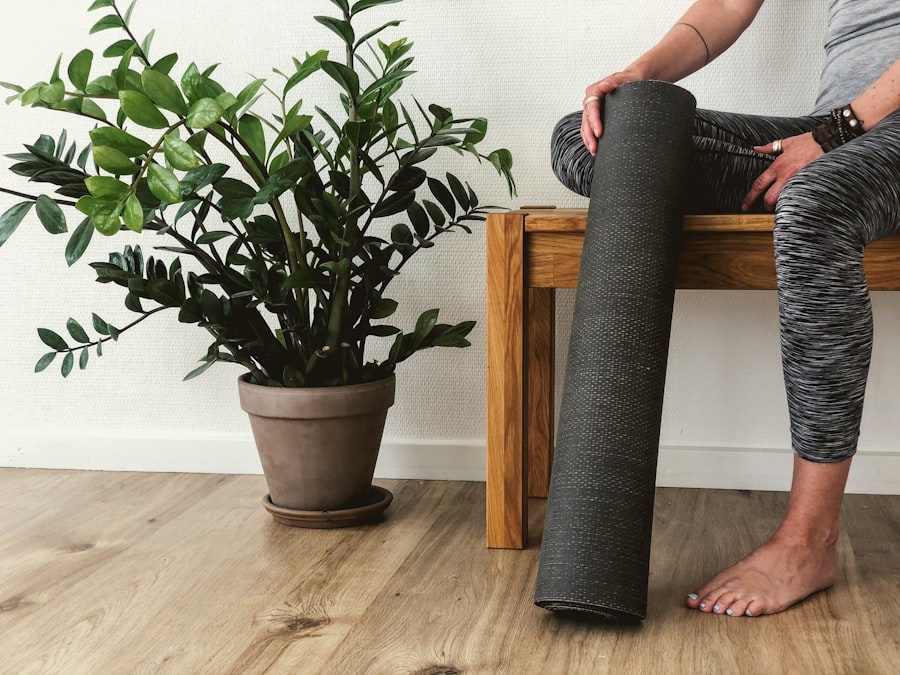
There are many different types of yoga, each with its own unique focus and benefits. Some types of yoga that are particularly beneficial for stress and anxiety reduction include Hatha yoga, Yin yoga, Restorative yoga, and Kundalini yoga.
Hatha yoga is a gentle form of yoga that focuses on physical postures (asanas) and breath control (pranayama). It is a great choice for beginners or those who prefer a slower-paced practice. Hatha yoga helps to calm the mind, relax the body, and improve flexibility, strength, and balance.
Yin yoga is a slow-paced style of yoga that involves holding passive poses for an extended period of time. It targets the connective tissues of the body, such as the ligaments, tendons, and fascia. Yin yoga helps to release tension from the body, increase flexibility, and promote deep relaxation.
Restorative yoga is a deeply relaxing form of yoga that involves using props such as blankets, bolsters, and blocks to support the body in passive poses. It is a great choice for those who are looking to unwind and de-stress. Restorative yoga helps to activate the relaxation response, release tension from the body, and promote deep relaxation.
Kundalini yoga is a dynamic form of yoga that combines physical postures, breathwork, meditation, and chanting. It focuses on awakening the dormant energy at the base of the spine and moving it up through the chakras. Kundalini yoga helps to balance the energy in the body, calm the mind, and promote spiritual growth.
Each type of yoga has its own unique benefits and drawbacks, so it’s important to find the style that resonates with you and meets your individual needs. It’s also worth noting that different styles of yoga may be more or less accessible depending on your physical abilities and limitations.
Yoga Poses for Stress and Anxiety Relief: A Step-by-Step Guide
There are several yoga poses that are particularly effective for stress and anxiety relief. These poses help to release tension from the body, calm the mind, and promote relaxation. Here is a step-by-step guide to some of the best yoga poses for stress and anxiety relief:
1. Child’s Pose (Balasana): Start by kneeling on the floor with your knees hip-width apart and your toes touching. Sit back on your heels and fold forward, bringing your forehead to the mat. Extend your arms forward or rest them alongside your body. Take slow, deep breaths and allow your body to relax into the pose. Stay in this pose for 5-10 breaths or as long as feels comfortable.
2. Legs-Up-The-Wall Pose (Viparita Karani): Sit with one side of your body against a wall. Lie down on your back and swing your legs up the wall, keeping them straight. Rest your arms alongside your body with your palms facing up. Close your eyes and take slow, deep breaths. Allow your body to relax into the pose and feel the gentle stretch in the back of your legs. Stay in this pose for 5-10 minutes or as long as feels comfortable.
3. Standing Forward Bend (Uttanasana): Stand with your feet hip-width apart and hinge forward at the hips, bringing your torso toward your thighs. Allow your head and neck to relax and your arms to hang down toward the floor. Bend your knees slightly if you have tight hamstrings. Take slow, deep breaths and allow your body to relax into the pose. Stay in this pose for 5-10 breaths or as long as feels comfortable.
4. Bridge Pose (Setu Bandhasana): Lie on your back with your knees bent and your feet hip-width apart. Press your feet into the mat and lift your hips off the ground, coming into a bridge shape. Interlace your fingers underneath your body and press your arms into the mat to lift your chest toward your chin. Take slow, deep breaths and allow your body to relax into the pose. Stay in this pose for 5-10 breaths or as long as feels comfortable.
5. Corpse Pose (Savasana): Lie on your back with your legs extended and your arms resting alongside your body with your palms facing up. Close your eyes and take slow, deep breaths. Allow your body to relax completely and let go of any tension or stress. Stay in this pose for 5-10 minutes or as long as feels comfortable.
These are just a few examples of yoga poses that can help to relieve stress and anxiety. It’s important to listen to your body and modify the poses as needed to suit your individual needs and limitations.
Incorporating Meditation and Mindfulness into Your Yoga Practice for Greater Calm
Meditation and mindfulness are important components of a yoga practice that can help to enhance the calming effects of yoga on the mind and body. Meditation involves focusing the mind on a specific object, such as the breath, a mantra, or a visual image, in order to cultivate a state of calm and clarity. Mindfulness involves bringing non-judgmental awareness to the present moment, including thoughts, feelings, bodily sensations, and external stimuli.
Incorporating meditation and mindfulness into your yoga practice can help to deepen your connection to the present moment, reduce stress and anxiety, and promote overall well-being. By bringing your attention to the breath, sensations in the body, or sounds in the environment, you can anchor yourself in the present moment and cultivate a sense of calm and relaxation.
There are many different meditation and mindfulness techniques that can be incorporated into a yoga practice. Some common techniques include:
– Breath awareness: Focus your attention on the sensation of the breath as it enters and leaves the body. Notice the quality of the breath, such as its depth, rhythm, and temperature.
– Body scan: Bring your attention to different parts of the body, starting from the top of the head and moving down to the toes. Notice any sensations or areas of tension or relaxation.
– Loving-kindness meditation: Cultivate feelings of love, compassion, and kindness toward yourself and others. Repeat phrases such as “May I be happy, may I be healthy, may I be safe” or “May all beings be happy, may all beings be healthy, may all beings be safe.”
– Mantra meditation: Repeat a word or phrase silently or out loud to help focus the mind. Some common mantras include “Om,” “So Hum” (I am that), or “Om Shanti” (peace).
Incorporating meditation and mindfulness into your yoga practice can be as simple as taking a few moments at the beginning or end of your practice to sit quietly and focus on your breath. You can also set aside dedicated time each day for formal meditation practice. Experiment with different techniques and find what works best for you.
Yoga as a Complementary Therapy for Managing Stress and Anxiety Disorders
Yoga can be used as a complementary therapy for managing stress and anxiety disorders such as generalized anxiety disorder (GAD), panic disorder, social anxiety disorder, and post-traumatic stress disorder (PTSD). While yoga is not a substitute for professional treatment, it can be a valuable addition to a comprehensive treatment plan.
Yoga can help to reduce symptoms of stress and anxiety by promoting relaxation, improving self-awareness, and enhancing coping skills. The physical postures, breathwork, meditation, and mindfulness techniques used in yoga can help individuals with stress and anxiety disorders to regulate their emotions, manage their symptoms, and improve their overall well-being.
The use of yoga as a complementary therapy for stress and anxiety disorders is supported by research. A study published in the Journal of Clinical Psychology found that yoga was effective in reducing symptoms of anxiety and depression in individuals with generalized anxiety disorder. Another study published in the Journal of Traumatic Stress found that yoga was effective in reducing symptoms of PTSD in veterans.
It’s important to note that while yoga can be beneficial for managing stress and anxiety disorders, it may not be suitable for everyone. It’s always best to consult with a healthcare professional before starting any new exercise or treatment program, especially if you have a pre-existing medical condition or are taking medication.
Tips for Maintaining a Consistent Yoga Practice to Manage Stress and Anxiety
Consistency is key when it comes to reaping the benefits of a yoga practice for stress and anxiety management. Here are some tips for maintaining a consistent yoga practice:
1. Set realistic goals: Start small and set achievable goals for your yoga practice. It’s better to practice for a few minutes every day than to do an hour-long practice once a week. Gradually increase the duration and intensity of your practice as you become more comfortable and confident. This will help you stay motivated and prevent burnout. Remember, yoga is a journey, and progress takes time. Celebrate each small achievement along the way and be patient with yourself.
If you’re looking for natural ways to manage stress and anxiety, yoga can be a powerful tool. Not only does it help improve flexibility and strength, but it also promotes relaxation and mindfulness. In fact, a recent study published in the Journal of Clinical Psychology found that practicing yoga can significantly reduce symptoms of anxiety and stress. If you’re interested in exploring more holistic approaches to wellness, you might also want to check out this article on herbal remedies for weight loss (source).