

Yoga has been practiced for thousands of years and is known for its numerous physical and mental benefits. In today’s fast-paced and stressful world, many people are turning to yoga as a way to find peace and relaxation. This blog post will explore the benefits of yoga for stress relief and provide tips and techniques for incorporating yoga into your daily routine.
The purpose of this blog post is to educate readers about the power of yoga in reducing stress and to provide practical guidance on how to incorporate yoga into their lives. By understanding the science behind how yoga reduces stress, learning about specific yoga poses for stress relief, and discovering tips and tricks for practicing yoga, readers will be equipped with the knowledge and tools they need to start their own yoga practice for stress reduction.
The Benefits of Yoga for Stress Relief
Yoga is a holistic practice that combines physical postures, breathing exercises, and meditation. This combination of movement, breath, and mindfulness has been shown to have a profound impact on reducing stress levels.
Physically, yoga helps to release tension in the body by stretching and strengthening muscles. This can help to alleviate physical symptoms of stress such as headaches, muscle tension, and fatigue. Additionally, the deep breathing techniques used in yoga help to activate the body’s relaxation response, which counteracts the effects of the stress response.
Mentally, yoga provides a space for individuals to quiet their minds and focus on the present moment. This can help to reduce anxiety and promote a sense of calmness and clarity. The mindfulness aspect of yoga also helps individuals become more aware of their thoughts and emotions, allowing them to better manage stress triggers and develop healthier coping mechanisms.
The Science Behind How Yoga Reduces Stress
The physiological changes that occur during yoga play a significant role in reducing stress levels. When we practice yoga, our bodies release endorphins, which are natural painkillers and mood elevators. These endorphins help to reduce stress and promote feelings of well-being.
Yoga also activates the parasympathetic nervous system, which is responsible for the body’s relaxation response. This helps to counteract the effects of the sympathetic nervous system, which is responsible for the body’s stress response. By activating the relaxation response, yoga helps to lower heart rate, blood pressure, and cortisol levels, all of which are elevated during times of stress.
Research has consistently shown the effectiveness of yoga in reducing stress. A study published in the Journal of Clinical Psychology found that a regular yoga practice significantly reduced perceived stress levels in participants. Another study published in the Journal of Alternative and Complementary Medicine found that yoga was effective in reducing symptoms of anxiety and depression.
The Top 5 Yoga Poses for Stress Relief
| Yoga Pose | Description | Benefits |
|---|---|---|
| Child’s Pose | Kneel on the floor, touch your big toes together and sit on your heels. Exhale and lay your torso down between your thighs. | Calms the brain, relieves stress and fatigue, stretches hips, thighs, and ankles. |
| Downward-Facing Dog | Start on your hands and knees, with your hands slightly in front of your shoulders. Exhale and lift your knees away from the floor. | Relieves stress, energizes the body, strengthens arms and legs, stretches hamstrings, calves, and spine. |
| Standing Forward Bend | Stand with your feet hip-width apart, exhale and bend forward from the hip joints, lengthening the front of your torso. | Calms the brain, relieves stress and anxiety, stretches hamstrings, calves, and hips. |
| Corpse Pose | Lie flat on your back, with your arms and legs slightly apart. Close your eyes and breathe deeply. | Relaxes the body and mind, reduces stress and anxiety, improves sleep quality. |
| Bridge Pose | Lie on your back with your knees bent and feet flat on the floor. Exhale and lift your hips up towards the ceiling. | Reduces stress and anxiety, strengthens back, buttocks, and legs, stretches chest, neck, and spine. |
There are many yoga poses that can help to reduce stress, but here are five of the most effective ones:
1. Child’s Pose (Balasana): This pose is a gentle forward fold that helps to calm the mind and release tension in the back and shoulders. To perform this pose, start by kneeling on the floor with your knees hip-width apart. Sit back on your heels and fold forward, resting your forehead on the mat or a block. Extend your arms forward or rest them alongside your body. Take slow, deep breaths and hold the pose for several minutes.
2. Legs-Up-The-Wall Pose (Viparita Karani): This pose is a restorative inversion that helps to calm the nervous system and promote relaxation. To perform this pose, lie on your back with your legs extended up against a wall or a bolster. Rest your arms alongside your body or place them on your belly or chest. Close your eyes and focus on your breath as you hold the pose for several minutes.
3. Standing Forward Fold (Uttanasana): This pose helps to release tension in the back and hamstrings and promotes a sense of calmness. To perform this pose, stand with your feet hip-width apart and fold forward, hinging at the hips. Let your head and neck relax and reach towards the ground. You can bend your knees slightly if needed. Hold the pose for several breaths, focusing on releasing tension with each exhale.
4. Bridge Pose (Setu Bandhasana): This pose helps to open the chest and shoulders and relieve tension in the back. To perform this pose, lie on your back with your knees bent and feet hip-width apart. Press into your feet and lift your hips off the mat, coming into a bridge shape. You can interlace your fingers underneath your body or keep your arms alongside your body. Hold the pose for several breaths, focusing on opening the chest and releasing tension in the back.
5. Corpse Pose (Savasana): This pose is a relaxation pose that helps to calm the mind and promote deep relaxation. To perform this pose, lie on your back with your legs extended and arms alongside your body. Close your eyes and focus on your breath as you relax every part of your body. Stay in this pose for several minutes, allowing yourself to fully let go and surrender to relaxation.
How to Practice Yoga for Stress Relief: Tips and Tricks
Creating a calming environment for yoga practice is essential for stress relief. Here are some tips for setting up a peaceful space:
1. Find a quiet space: Choose a room or area in your home where you can practice yoga without distractions or interruptions.
2. Clear clutter: Remove any unnecessary items from the space to create a clean and peaceful environment.
3. Use soft lighting: Dim the lights or use candles to create a soothing atmosphere.
4. Play calming music: Choose soft instrumental music or nature sounds to enhance relaxation.
5. Use props: Use props such as blankets, bolsters, and blocks to support your body and make the poses more comfortable.
Incorporating mindfulness into your yoga practice can also enhance its stress-relieving benefits. Here are some suggestions for practicing mindfulness during yoga:
1. Focus on your breath: Pay attention to the sensation of your breath as you move through each pose. Take slow, deep breaths and try to synchronize your movements with your breath.
2. Stay present: Instead of letting your mind wander, bring your attention back to the present moment. Notice the sensations in your body and the thoughts that arise without judgment.
3. Practice gratitude: Take a moment at the beginning or end of your practice to express gratitude for your body and the opportunity to practice yoga.
The Importance of Breathwork in Yoga for Stress Reduction
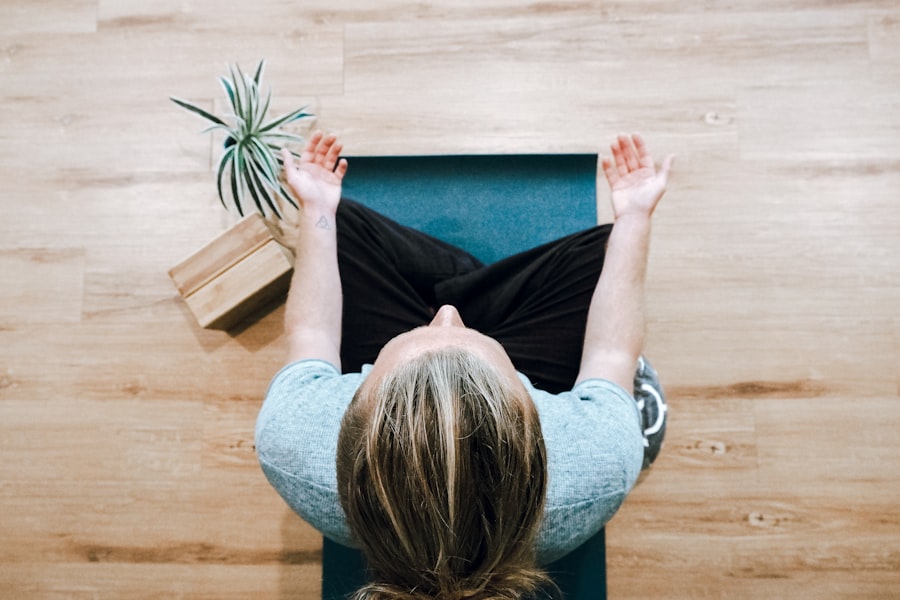
Breathwork, also known as pranayama, is an integral part of yoga and plays a crucial role in reducing stress. When we are stressed, our breathing becomes shallow and rapid. This activates the sympathetic nervous system and keeps us in a state of fight-or-flight.
By practicing deep, slow breathing techniques during yoga, we can activate the parasympathetic nervous system and promote relaxation. Deep breathing helps to slow down the heart rate, lower blood pressure, and reduce cortisol levels.
There are many different breathing techniques that can be used for stress relief. Here are a few examples:
1. Diaphragmatic breathing: This technique involves breathing deeply into the diaphragm, allowing the belly to rise on the inhale and fall on the exhale. To practice diaphragmatic breathing, lie on your back with one hand on your belly and one hand on your chest. Take slow, deep breaths, focusing on expanding the belly with each inhale and contracting it with each exhale.
2. Alternate nostril breathing: This technique involves alternating between breathing through the left nostril and the right nostril. To practice alternate nostril breathing, sit in a comfortable position and use your right thumb to close your right nostril. Inhale through your left nostril, then use your right ring finger to close your left nostril and exhale through your right nostril. Continue alternating between the two nostrils for several rounds.
3. Box breathing: This technique involves inhaling, holding the breath, exhaling, and holding the breath again, all for equal counts. To practice box breathing, inhale for a count of four, hold the breath for a count of four, exhale for a count of four, and hold the breath again for a count of four. Repeat this cycle several times.
How to Incorporate Yoga into Your Daily Routine for Maximum Stress Relief
Finding time for yoga can be challenging, especially when life gets busy. However, even just a few minutes of yoga each day can have a significant impact on reducing stress levels. Here are some suggestions for fitting yoga into a busy schedule:
1. Start small: Begin with just a few minutes of yoga each day and gradually increase the duration as you become more comfortable.
2. Schedule it in: Set aside specific times each day for your yoga practice and treat it as an important appointment.
3. Combine it with other activities: Incorporate yoga into activities you already do daily, such as stretching before bed or doing a few poses during your lunch break.
4. Be flexible: If you can’t find time for a full yoga practice, do what you can. Even a few minutes of deep breathing or a quick stretch can help to reduce stress.
Creating a consistent yoga practice is key to maximizing its stress-relieving benefits. Here are some tips for staying consistent:
1. Set realistic goals: Start with small, achievable goals that you can easily incorporate into your daily routine.
2. Find accountability: Practice yoga with a friend or join a yoga class to help you stay motivated and accountable.
3. Be kind to yourself: If you miss a day or don’t have time for a full practice, don’t beat yourself up. Remember that any amount of yoga is better than none.
4. Celebrate your progress: Take note of how you feel after each yoga practice and celebrate the positive changes you experience.
Yoga for Stress Relief: A Beginner’s Guide
If you’re new to yoga, starting a practice for stress relief can feel overwhelming. Here are some basics to get you started:
1. Choose the right style: There are many different styles of yoga, so it’s important to choose one that aligns with your goals and preferences. For stress relief, gentle and restorative styles such as Hatha or Yin yoga are often recommended.
2. Start with beginner-friendly poses: Focus on learning basic poses that are accessible to beginners. As you become more comfortable, you can gradually incorporate more challenging poses into your practice.
3. Listen to your body: Pay attention to how your body feels during each pose and modify as needed. It’s important to honor your body’s limitations and not push yourself too hard.
4. Practice regularly: Consistency is key when starting a yoga practice. Aim for at least a few minutes of yoga each day, gradually increasing the duration as you become more comfortable.
Yoga and Mindfulness: A Powerful Combination for Stress Reduction
Mindfulness is the practice of bringing one’s attention to the present moment without judgment. When combined with yoga, mindfulness can enhance the stress-relieving benefits of the practice. Here are some ways to incorporate mindfulness into your yoga practice:
1. Focus on the sensations in your body as you move through each pose. Notice how each movement feels and bring your attention back to the present moment if your mind starts to wander.
2. Use affirmations or mantras to help focus your mind. Repeat a positive affirmation or mantra silently to yourself as you move through each pose.
3. Practice gratitude during your yoga practice. Take a moment to express gratitude for your body and the opportunity to practice yoga.
4. Use visualization techniques to enhance relaxation. Imagine yourself in a peaceful and serene environment as you move through each pose.
The Best Time of Day to Practice Yoga for Stress Relief
The best time of day to practice yoga for stress relief can vary depending on individual preferences and schedules. However, there are certain times of day that may be more beneficial for stress reduction:
1. Morning: Practicing yoga in the morning can help to set a positive tone for the rest of the day. It can help to wake up the body and mind, increase energy levels, and promote mental clarity.
2. Midday: Taking a break in the middle of the day to practice yoga can help to reduce stress and increase productivity. It can provide a much-needed reset and help to alleviate tension and fatigue.
3. Evening: Practicing yoga in the evening can help to unwind after a long day and prepare the body and mind for restful sleep. It can help to release tension in the body and promote relaxation.
Ultimately, the best time of day to practice yoga for stress relief is the time that works best for you and fits into your schedule. Experiment with different times of day and pay attention to how your body and mind respond.
How to Use Yoga to Cope with Stressful Situations in Daily Life
Yoga can be a powerful tool for managing stress in daily life, even outside of your formal practice. Here are some tips for using yoga to cope with stressful situations:
1. Take deep breaths: When faced with a stressful situation, take a moment to pause and take several deep breaths. This will help activate the relaxation response and calm your nervous system.
2. Practice mindfulness: Bring your attention to the present moment and focus on your breath. Notice any thoughts or emotions that arise without judgment.
3. Use grounding techniques: If you’re feeling overwhelmed, use grounding techniques such as standing with your feet firmly planted on the ground or placing your hand on your heart or belly to help bring you back to the present moment.
4. Incorporate yoga poses: If possible, find a quiet space and practice a few yoga poses to help release tension and promote relaxation. Even just a few minutes of yoga can make a difference.
In conclusion, yoga is a powerful tool for reducing stress and promoting overall well-being. By incorporating yoga into your daily routine, you can experience the physical and mental benefits of this ancient practice. Whether you’re a beginner or an experienced yogi, there are many ways to incorporate yoga into your life for maximum stress relief. So why wait? Start your yoga practice today and experience the transformative power of yoga for stress reduction.
If you’re looking for effective ways to relieve stress, incorporating yoga into your routine can be incredibly beneficial. Not only does it help improve flexibility and strength, but it also promotes relaxation and reduces anxiety. In fact, a recent article on Aerns.com highlights the power of yoga postures for stress relief. The article provides detailed instructions on various yoga poses that specifically target stress reduction. From the calming Child’s Pose to the rejuvenating Corpse Pose, these postures can help you find inner peace and tranquility amidst the chaos of daily life. To learn more about these stress-relieving yoga postures, check out the article here.