

Balance and flexibility exercises are an essential component of any fitness routine. These exercises focus on improving stability, coordination, and range of motion in the body. Balance exercises help to strengthen the muscles that support the body’s alignment, while flexibility exercises increase the ability of muscles and joints to move through their full range of motion.
Incorporating balance and flexibility exercises into your fitness routine is important for several reasons. First, these exercises can improve posture and balance, which can help prevent falls and injuries. Second, they can reduce the risk of injury during other physical activities by improving stability and coordination. Third, they can increase your range of motion, allowing you to move more freely and comfortably. Finally, balance and flexibility exercises can enhance athletic performance by improving agility, speed, and power.
Benefits of Balance and Flexibility Exercises
One of the key benefits of balance and flexibility exercises is improved posture and balance. These exercises target the muscles that support the spine and help to align the body properly. By strengthening these muscles, you can improve your posture and reduce the risk of developing back pain or other musculoskeletal issues. Additionally, balance exercises help to improve stability and coordination, which can prevent falls and injuries.
Another benefit of balance and flexibility exercises is increased range of motion. As we age, our muscles and joints naturally become stiffer and less flexible. This can lead to decreased mobility and increased risk of injury. By regularly performing flexibility exercises, you can maintain or even improve your range of motion, allowing you to move more freely and comfortably.
In addition to improving posture and range of motion, balance and flexibility exercises can also enhance athletic performance. Many sports require a high level of agility, speed, and power, all of which are improved through balance and flexibility training. By incorporating these exercises into your fitness routine, you can improve your overall athletic performance and reduce the risk of injury during physical activity.
How to Get Started with Balance and Flexibility Exercises
Before starting any new exercise program, it is important to consult with a fitness professional. They can assess your current fitness level and help you develop a plan that is safe and effective for your individual needs. They can also provide guidance on proper form and technique to ensure you are performing the exercises correctly.
When starting balance and flexibility exercises, it is best to begin with basic exercises and gradually increase the difficulty as your strength and flexibility improve. This will help prevent injury and allow your body to adapt to the new movements. Some basic balance exercises include standing on one leg, heel-to-toe walk, and single-leg squats. For flexibility, start with simple stretches for major muscle groups such as the hamstrings, quadriceps, and shoulders.
To incorporate balance and flexibility exercises into your regular workout routine, try adding them at the beginning or end of your workout. This will ensure that you are properly warmed up before performing more intense exercises and allow for a cool-down period afterwards. Aim to perform balance exercises 2-3 times per week and flexibility exercises at least 3-4 times per week for optimal results.
The Importance of Warm-Up and Cool-Down
| Metrics | Importance |
|---|---|
| Reduced risk of injury | Warm-up and cool-down can help prevent injuries by preparing the body for physical activity and gradually returning it to a resting state. |
| Improved performance | Proper warm-up can increase blood flow, oxygen delivery, and muscle temperature, which can enhance performance during physical activity. |
| Reduced muscle soreness | Cool-down can help reduce muscle soreness by gradually decreasing heart rate and blood pressure, and removing waste products from the muscles. |
| Improved flexibility | Warm-up can improve flexibility by increasing muscle temperature and blood flow, which can make muscles more pliable and less prone to injury. |
| Enhanced mental preparation | Warm-up can help mentally prepare for physical activity by increasing focus, reducing anxiety, and improving mood. |
Before engaging in any physical activity, it is important to warm up the body to prepare it for exercise. A proper warm-up increases blood flow to the muscles, raises body temperature, and loosens up the joints. This helps to prevent injury and improve performance during the workout.
A warm-up should consist of dynamic stretching exercises that mimic the movements you will be doing during your workout. For example, if you are planning to do a leg workout, start with some leg swings, walking lunges, or high knees. If you are going for a run, start with a brisk walk or light jog followed by some leg swings and arm circles.
After completing your workout, it is equally important to cool down and stretch the muscles that were worked. This helps to prevent muscle soreness and stiffness, and allows the body to gradually return to its resting state. A cool-down should consist of static stretching exercises that target the major muscle groups. Hold each stretch for 15-30 seconds and repeat 2-3 times.
Top 5 Yoga Poses for Balance and Flexibility
Yoga is a popular form of exercise that combines balance, flexibility, and strength training. It focuses on controlled movements and deep breathing to improve physical and mental well-being. Here are five yoga poses that can help improve balance and flexibility:
1. Tree Pose (Vrksasana): This pose helps to improve balance and strengthen the muscles in the legs and core. Stand tall with your feet together, then shift your weight onto your left foot. Place your right foot on the inside of your left thigh or calf, avoiding the knee joint. Bring your hands together at your heart center and find a focal point to help with balance. Hold for 30 seconds to 1 minute, then switch sides.
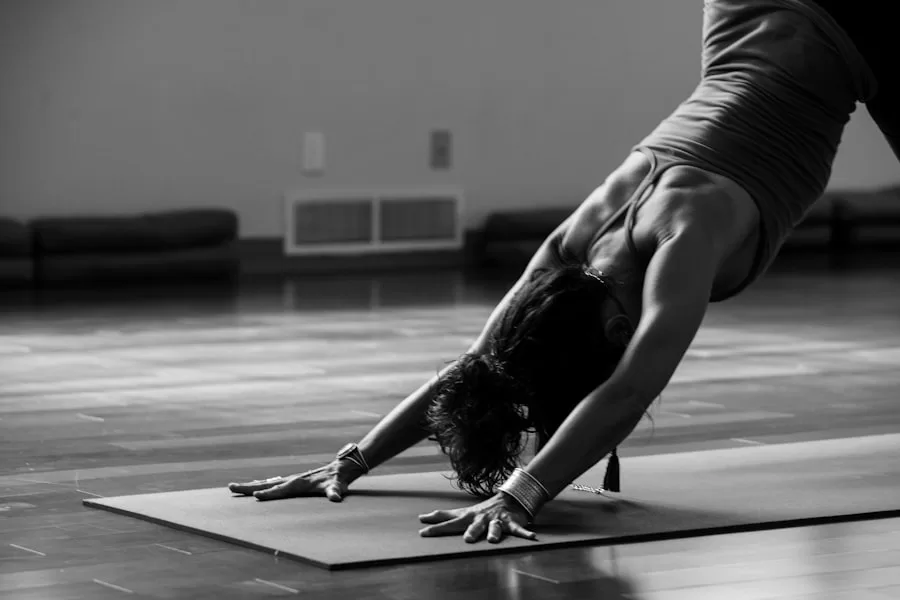
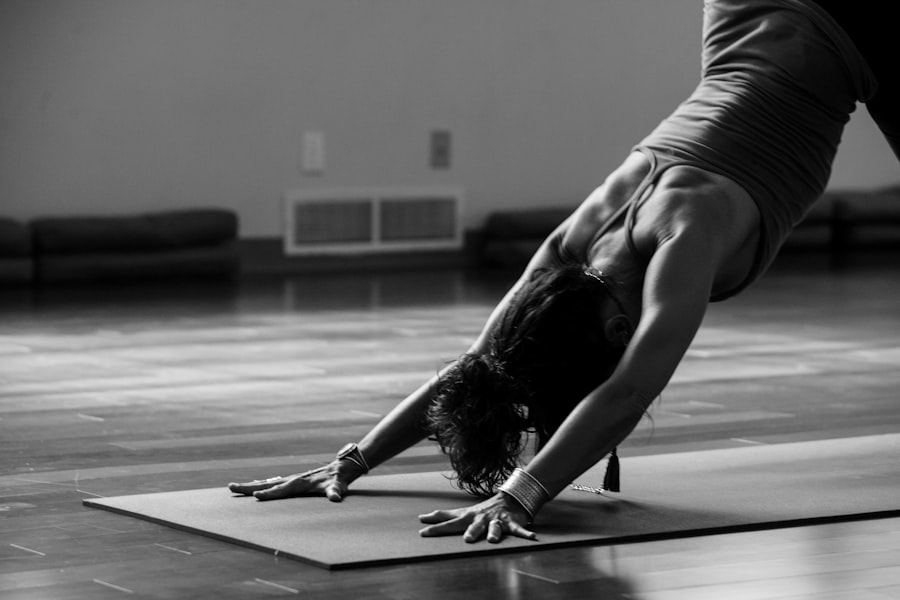
2. Downward Facing Dog (Adho Mukha Svanasana): This pose stretches the hamstrings, calves, and shoulders while also strengthening the arms and core. Start on your hands and knees, then lift your hips up towards the ceiling, forming an inverted V shape with your body. Press your heels towards the floor and lengthen through your spine. Hold for 5-10 breaths.
3. Warrior II (Virabhadrasana II): This pose helps to improve balance, strengthen the legs, and open up the hips and chest. Start in a lunge position with your right foot forward and left foot back. Turn your left foot out at a 90-degree angle and bend your right knee so it is directly over your ankle. Extend your arms out to the sides, parallel to the floor, and gaze over your right fingertips. Hold for 30 seconds to 1 minute, then switch sides.
4. Extended Triangle Pose (Utthita Trikonasana): This pose stretches the hamstrings, hips, and side body while also improving balance and core strength. Start in a wide-legged stance with your feet parallel to each other. Turn your right foot out at a 90-degree angle and extend your arms out to the sides. Reach your right hand towards your right foot, keeping your left arm extended towards the ceiling. Gaze up towards your left hand. Hold for 30 seconds to 1 minute, then switch sides.
5. Bridge Pose (Setu Bandhasana): This pose helps to open up the chest and shoulders, stretch the hip flexors, and strengthen the glutes and hamstrings. Lie on your back with your knees bent and feet hip-width apart. Press through your feet and lift your hips up towards the ceiling, creating a bridge shape with your body. Interlace your hands underneath you and press your shoulders down into the mat. Hold for 30 seconds to 1 minute.
Pilates Exercises for Improved Balance and Flexibility
Pilates is a low-impact exercise method that focuses on core strength, flexibility, and body awareness. It can help improve balance and flexibility by targeting the deep stabilizing muscles of the body. Here are some Pilates exercises that can help improve balance and flexibility:
1. Single Leg Stretch: Lie on your back with your knees bent and feet flat on the floor. Lift one leg off the floor and bring it towards your chest, while extending the other leg straight out in front of you. Place both hands on the shin of the lifted leg and gently pull it towards you as you switch legs. Continue alternating legs for 8-10 repetitions.
2. Swan Dive: Lie on your stomach with your arms extended overhead and legs straight. Lift your chest and arms off the mat, reaching forward with your fingertips as you lift your legs off the mat. Keep your gaze down and lengthen through your spine. Hold for a few breaths, then lower back down.
3. Side Leg Lift: Lie on your side with your legs extended straight and stacked on top of each other. Lift the top leg up towards the ceiling, keeping it straight and in line with your body. Lower back down with control. Repeat for 8-10 repetitions, then switch sides.
4. Roll Up: Sit tall with your legs extended straight in front of you and arms reaching towards your toes. Slowly roll down through your spine, one vertebra at a time, until you are lying flat on your back. Roll back up to a seated position, reaching forward with your fingertips. Repeat for 8-10 repetitions.
5. Standing Leg Circles: Stand tall with one hand resting on a chair or wall for support. Lift one leg off the floor and make small circles with your foot in one direction, then switch directions. Repeat for 8-10 circles, then switch legs.
Tai Chi: A Gentle Way to Improve Balance and Flexibility
Tai Chi is a traditional Chinese martial art that combines slow, flowing movements with deep breathing and mental focus. It is often referred to as “moving meditation” and is known for its numerous health benefits, including improved balance and flexibility.
Tai Chi can improve balance and flexibility by focusing on controlled movements that require shifting weight from one leg to another and maintaining proper alignment of the body. The slow, flowing movements help to improve stability and coordination, while the deep breathing promotes relaxation and mental clarity.
Tai Chi has a long history dating back over 400 years and was originally developed as a martial art. Today, it is practiced by millions of people around the world for its health benefits. Some examples of Tai Chi exercises for balance and flexibility include the “Grasp the Sparrow’s Tail” and “Wave Hands Like Clouds” movements.
Resistance Band Exercises for Balance and Flexibility
Resistance bands are a versatile and affordable tool that can be used to improve balance and flexibility. They provide resistance throughout the entire range of motion, helping to strengthen muscles and increase flexibility. Here are some resistance band exercises that can help improve balance and flexibility:
1. Standing Leg Abduction: Stand tall with a resistance band looped around your ankles. Lift one leg out to the side, keeping it straight and in line with your body. Slowly lower back down with control. Repeat for 8-10 repetitions, then switch legs.
2. Seated Forward Fold: Sit on the floor with your legs extended straight in front of you and a resistance band looped around your feet. Hold onto the ends of the band with both hands and gently pull towards you as you fold forward at the hips. Keep your back straight and chest lifted. Hold for 30 seconds to 1 minute.
3. Standing Bicep Curl: Stand tall with a resistance band looped under your feet and one end in each hand. Keep your elbows close to your sides and palms facing forward. Bend your elbows and curl the bands up towards your shoulders, then slowly lower back down with control. Repeat for 8-10 repetitions.
4. Standing Tricep Extension: Stand tall with a resistance band looped under your feet and one end in each hand. Extend your arms overhead, keeping them close to your ears. Bend your elbows and lower the bands behind your head, then straighten your arms back up towards the ceiling. Repeat for 8-10 repetitions.
5. Standing Side Leg Lift: Stand tall with a resistance band looped around your ankles. Lift one leg out to the side, keeping it straight and in line with your body. Slowly lower back down with control. Repeat for 8-10 repetitions, then switch legs.
Tips for Improving Balance and Flexibility at Home
Improving balance and flexibility doesn’t have to be limited to the gym or studio. There are many exercises that can be done at home to help improve these areas. Here are some tips for improving balance and flexibility at home:
1. Create a dedicated space: Set aside a specific area in your home where you can perform balance and flexibility exercises. Clear away any obstacles or distractions to create a safe and peaceful environment.
2. Use props: Props such as yoga blocks, straps, and bolsters can be helpful for modifying exercises and providing support during balance and flexibility training. Invest in some basic props to enhance your home practice.
3. Follow online tutorials: There are countless online tutorials and videos available that provide step-by-step instructions for balance and flexibility exercises. Find a reputable source and follow along with their guidance.
4. Practice regularly: Consistency is key when it comes to improving balance and flexibility. Aim to practice at least 2-3 times per week, gradually increasing the duration and intensity of your workouts as you progress.
5. Listen to your body: Pay attention to how your body feels during each exercise and modify or skip any movements that cause pain or discomfort. It’s important to work within your own limits and avoid pushing yourself too hard.
Incorporating Balance and Flexibility Exercises into Your Fitness Routine
Incorporating balance and flexibility exercises into your regular fitness routine is essential for maintaining overall health and well-being. Here are some tips for incorporating these exercises into your routine:
1. Start with a consultation: Before starting any new exercise program, consult with a fitness professional who can assess your current fitness level and help you develop a plan that is safe and effective for your individual needs.
2. Warm up and cool down: Always start your workout with a proper warm-up to prepare your body for exercise and end with a cool-down to allow your body to gradually return to its resting state. This will help prevent injury and improve recovery.
3. Schedule dedicated balance and flexibility workouts: Set aside specific days or times each week for balance and flexibility workouts. This will ensure that you are consistently working on these areas and making progress over time.
4. Progress gradually: Start with basic exercises and gradually increase the difficulty as your strength and flexibility improve. This will help prevent injury and allow your body to adapt to the new movements.
5. Be consistent: Consistency is key when it comes to improving balance and flexibility. Aim to practice these exercises at least 2-3 times per week for optimal results.
In conclusion, balance and flexibility exercises are an important component of any fitness routine. They can improve posture, reduce the risk of injury, increase range of motion, and enhance athletic performance. By incorporating these exercises into your regular workout routine, you can improve your overall fitness level and maintain a healthy, active lifestyle. Remember to consult with a fitness professional before starting any new exercise program, and always listen to your body and work within your own limits. With dedication and consistency, you can achieve improved balance and flexibility in no time.
If you’re looking to improve your balance and flexibility, you may want to consider incorporating water aerobics into your fitness routine. Water aerobics is a low-impact exercise that provides a gentle yet effective way to work on your balance and flexibility. In fact, a recent article on Aerns.com highlights the benefits of water aerobics for improving balance and flexibility. Check out the article here to learn more about how water aerobics can help you achieve your fitness goals.