


Home workouts are a convenient and cost-effective way to stay fit and healthy without the need for a gym membership or expensive equipment. With the right exercises and a little creativity, you can achieve a full-body workout in the comfort of your own home. Whether you’re a beginner or an experienced fitness enthusiast, home workouts offer a variety of benefits that make them an attractive option for many people.
One of the main advantages of home workouts is that they require little to no equipment. You can use your own body weight as resistance or incorporate household items such as water bottles or towels to add some extra challenge to your exercises. This means that you don’t have to invest in expensive gym equipment or worry about limited space in your home. Home workouts are also versatile, allowing you to target different muscle groups and adjust the intensity according to your fitness level.
Benefits of Home Workouts: No Gym Membership Needed
One of the biggest advantages of home workouts is that they are cost-effective. Gym memberships can be expensive, especially if you’re not using them regularly. By working out at home, you can save money on monthly fees and invest in other aspects of your health and fitness journey, such as nutritious food or fitness equipment if desired.
Another benefit of home workouts is convenience. You don’t have to worry about commuting to the gym or fitting your workout into a specific time slot. With home workouts, you have the flexibility to exercise whenever it suits you best, whether it’s early in the morning, during your lunch break, or late at night. This convenience allows you to easily incorporate exercise into your daily routine without any added stress.
Additionally, home workouts eliminate the need to worry about gym etiquette. You don’t have to wait for equipment or feel self-conscious about working out in front of others. This can be particularly beneficial for beginners who may feel intimidated by the gym environment. Working out at home provides a safe and comfortable space where you can focus on your own fitness goals without any distractions.
Lastly, home workouts offer more privacy. Some people may feel uncomfortable exercising in front of others or prefer to have a more intimate setting. By working out at home, you can create a personal and private space where you can fully concentrate on your workout without any external distractions.
How to Create an Effective Home Workout Routine
Creating an effective home workout routine requires some planning and consideration. Here are some steps to help you get started:
1. Determine your fitness goals: Before starting any workout routine, it’s important to identify your fitness goals. Whether you want to lose weight, build muscle, or improve your overall fitness level, having a clear goal in mind will help you stay motivated and focused.
2. Choose exercises that target specific muscle groups: To achieve a full-body workout, it’s important to include exercises that target different muscle groups. This will help you build strength and improve overall muscle tone. Some examples of exercises that target specific muscle groups include squats for the lower body, push-ups for the upper body, and planks for the core.
3. Create a schedule: Consistency is key when it comes to achieving your fitness goals. Create a schedule that works for you and stick to it. Whether you prefer to work out in the morning or evening, make sure to allocate dedicated time for your home workouts.
4. Start with basic exercises and gradually increase intensity: If you’re new to home workouts or exercise in general, it’s important to start with basic exercises and gradually increase the intensity as your fitness level improves. This will help prevent injuries and ensure that you’re progressing at a safe and manageable pace.
Top 5 Bodyweight Exercises for a Full-Body Workout
| Exercise | Muscles Worked | Difficulty Level | Calories Burned (30 mins) |
|---|---|---|---|
| Push-ups | Chest, triceps, shoulders, core | Intermediate | 150-200 |
| Squats | Quads, glutes, hamstrings, core | Beginner | 100-150 |
| Lunges | Quads, glutes, hamstrings, calves, core | Intermediate | 150-200 |
| Plank | Core, shoulders, back | Beginner | 50-100 |
| Burpees | Full body | Advanced | 200-250 |
When it comes to home workouts, bodyweight exercises are an excellent choice as they require no equipment and can be done anywhere. Here are five top bodyweight exercises that target different muscle groups for a full-body workout:
1. Squats: Squats are a great exercise for targeting the lower body, specifically the glutes, quads, and hamstrings. To perform a squat, stand with your feet shoulder-width apart, lower your body by bending your knees and pushing your hips back, and then return to the starting position.
2. Push-ups: Push-ups are a classic exercise that targets the chest, shoulders, triceps, and core. Start in a plank position with your hands slightly wider than shoulder-width apart, lower your body by bending your elbows, and then push back up to the starting position.
3. Lunges: Lunges are an effective exercise for targeting the legs and glutes. Start by standing with your feet hip-width apart, take a step forward with one foot and lower your body until both knees are bent at a 90-degree angle, then push back up to the starting position and repeat on the other side.
4. Planks: Planks are a great exercise for strengthening the core muscles. Start in a push-up position with your hands directly under your shoulders, engage your core muscles and hold the position for as long as you can while maintaining proper form.
5. Burpees: Burpees are a full-body exercise that combines cardio and strength training. Start in a standing position, lower your body into a squat position, place your hands on the floor in front of you, kick your feet back into a plank position, do a push-up, jump your feet back to the squat position, and then jump up explosively.
The Importance of Warm-Up and Cool-Down in Home Workouts
Warm-up and cool-down exercises are an essential part of any workout routine, including home workouts. They help prepare your body for exercise and prevent injuries by increasing blood flow to the muscles and improving flexibility. Here’s why warm-up and cool-down are important:
Warm-up: A proper warm-up before your home workout helps increase your heart rate, warm up your muscles, and prepare your body for the upcoming exercise. It also helps improve your range of motion and flexibility, making it easier to perform the exercises with proper form. Some examples of warm-up exercises include jogging in place, jumping jacks, or dynamic stretches such as arm circles or leg swings.
Cool-down: Cooling down after your home workout is just as important as warming up. It helps gradually lower your heart rate, prevent dizziness or lightheadedness, and reduce muscle soreness. Cool-down exercises should focus on stretching the muscles that were worked during the workout. Some examples of cool-down exercises include static stretches such as hamstring stretches or shoulder stretches.
How to Increase the Intensity of Your Home Workouts
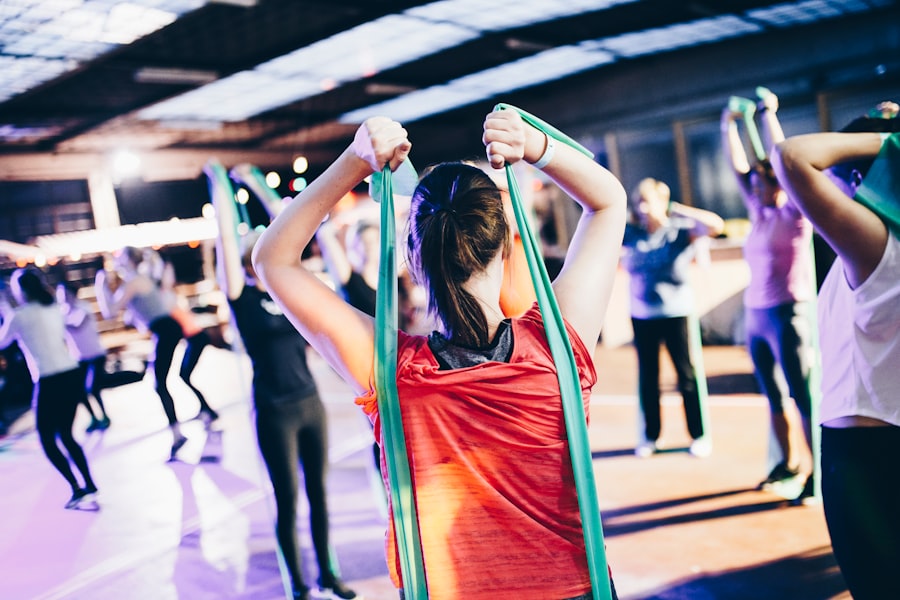
Once you’ve established a regular home workout routine, you may want to increase the intensity to continue challenging your body and making progress. Here are some ways to increase the intensity of your home workouts:
1. Add weights or resistance bands: If you’re looking to add more resistance to your exercises, you can incorporate weights or resistance bands into your home workouts. This will help increase the challenge and target specific muscle groups more effectively.
2. Increase reps or sets: Another way to increase the intensity is by increasing the number of repetitions or sets for each exercise. For example, if you’re doing squats, you can gradually increase the number of squats you do in each set or add an extra set to your routine.
3. Incorporate high-intensity interval training (HIIT): HIIT is a popular training method that involves short bursts of intense exercise followed by periods of rest or lower-intensity exercise. This type of training can help boost cardiovascular fitness and burn more calories in a shorter amount of time. You can incorporate HIIT into your home workouts by adding intervals of high-intensity exercises such as burpees or mountain climbers.
Tips for Staying Motivated During Home Workouts
Staying motivated is key to maintaining a consistent home workout routine. Here are some tips to help you stay motivated and on track:
1. Set achievable goals: Set realistic and achievable goals that are specific, measurable, attainable, relevant, and time-bound (SMART). Having clear goals will give you something to work towards and help you stay motivated.
2. Find a workout buddy: Working out with a friend or family member can make your home workouts more enjoyable and help keep you accountable. You can motivate each other, share workout ideas, and celebrate each other’s progress.
3. Mix up your routine: Doing the same exercises every day can become monotonous and lead to boredom. Keep your home workouts interesting by incorporating different exercises, trying new workout videos or apps, or challenging yourself with new variations of familiar exercises.
4. Reward yourself: Set small rewards for yourself when you achieve certain milestones or reach your fitness goals. This can be anything from treating yourself to a new workout outfit or enjoying a relaxing massage.
Common Mistakes to Avoid During Home Workouts
While home workouts offer many benefits, there are some common mistakes that people often make. Here are some mistakes to avoid during your home workouts:
1. Skipping warm-up and cool-down: As mentioned earlier, warm-up and cool-down exercises are essential for preventing injuries and improving performance. Skipping these important steps can increase the risk of muscle strains or other injuries.
2. Poor form: It’s important to maintain proper form during your home workouts to ensure that you’re targeting the right muscles and avoiding unnecessary strain on your joints. If you’re unsure about the correct form for a particular exercise, consider seeking guidance from a fitness professional or using online resources for proper instruction.
3. Overtraining: While it’s important to challenge yourself during your home workouts, it’s equally important to listen to your body and give it time to rest and recover. Overtraining can lead to fatigue, decreased performance, and increased risk of injury. Make sure to incorporate rest days into your routine and listen to your body’s signals.
4. Not tracking progress: Tracking your progress is important for staying motivated and seeing how far you’ve come. Keep a workout journal or use fitness apps or trackers to record your workouts, track your progress, and set new goals.
How to Track Progress and Achieve Your Fitness Goals at Home
Tracking your progress is essential for staying motivated and achieving your fitness goals. Here are some ways to track your progress during your home workouts:
1. Keep a workout journal: Keeping a workout journal allows you to record your workouts, track your progress, and identify areas for improvement. You can write down the exercises you performed, the number of reps and sets, and any notes or observations about how you felt during the workout.
2. Use fitness apps or trackers: There are many fitness apps and trackers available that can help you track your workouts, monitor your heart rate, count calories burned, and set goals. These apps can provide valuable insights into your progress and help you stay motivated.
3. Take progress photos: Taking progress photos can be a great way to visually track your transformation over time. Take photos at regular intervals, such as every month or every few months, and compare them to see how your body has changed.
Home Workouts for a Healthy and Fit Lifestyle
In conclusion, home workouts offer a convenient and cost-effective way to stay fit and healthy without the need for a gym membership or expensive equipment. With the right exercises and a little creativity, you can achieve a full-body workout in the comfort of your own home. The benefits of home workouts include cost-effectiveness, convenience, privacy, and the ability to tailor your workouts to your specific goals and fitness level.
To create an effective home workout routine, it’s important to determine your fitness goals, choose exercises that target specific muscle groups, create a schedule, and gradually increase the intensity over time. Incorporating warm-up and cool-down exercises is essential for preventing injuries and improving performance. To stay motivated during your home workouts, set achievable goals, find a workout buddy, mix up your routine, and reward yourself for reaching milestones.
Avoid common mistakes such as skipping warm-up and cool-down, poor form, overtraining, and not tracking progress. Instead, focus on maintaining proper form, listening to your body’s signals, and tracking your progress through a workout journal, fitness apps or trackers, and progress photos. With consistency and dedication, home workouts can help you achieve a healthy and fit lifestyle. So why wait? Start your home workout routine today and enjoy the benefits of exercising in the comfort of your own home.
Looking for ways to stay fit and healthy at home without any equipment? Check out this article on juice for all seasons. It provides valuable insights into the benefits of incorporating fresh juices into your daily routine, helping you maintain a balanced diet and boost your immune system. And while you’re at it, don’t forget to explore other informative articles on healthy tips for beautiful hair and best juices to boost your metabolism to enhance your overall well-being. Stay active, stay healthy!