
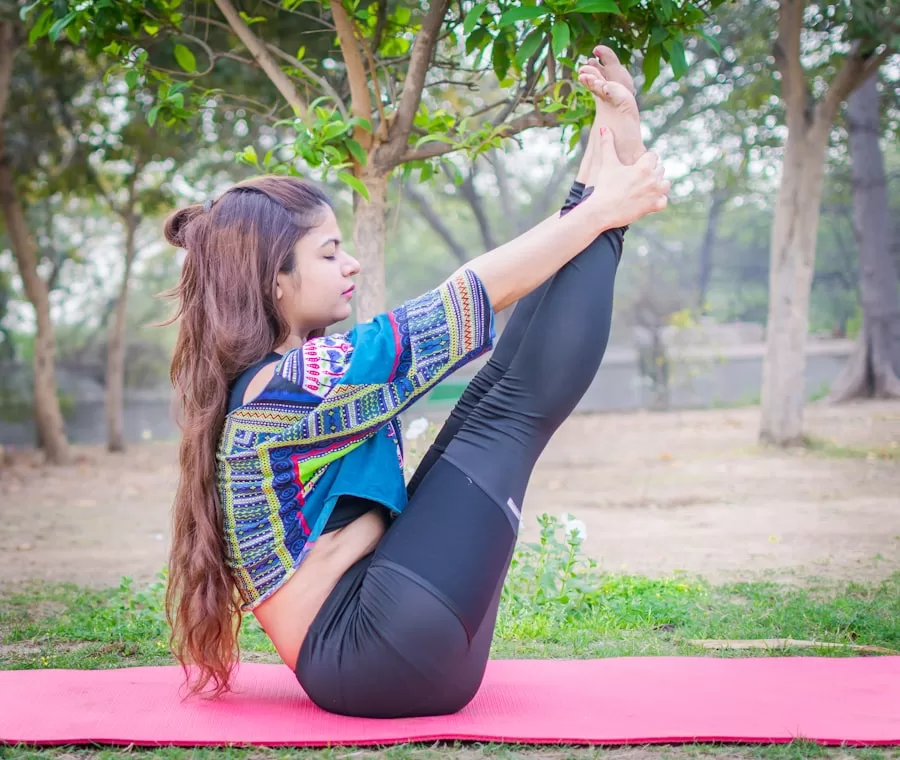

Hamstring strength is often overlooked in fitness and athletic training, but it plays a crucial role in overall lower body strength and performance. The hamstrings are a group of muscles located on the back of the thigh, consisting of the biceps femoris, semitendinosus, and semimembranosus. These muscles are responsible for flexing the knee and extending the hip, making them essential for movements such as running, jumping, and kicking.
Hamstring exercises can benefit athletes of all levels by improving speed, power, and agility. Strong hamstrings allow for more forceful contractions, resulting in increased speed and power during explosive movements. Additionally, strong hamstrings can enhance agility by providing stability and control during quick changes in direction. By incorporating hamstring strengthening exercises into your training routine, you can improve your athletic performance and reduce the risk of injury.
Benefits of Strong Hamstrings for Athletic Performance
Strong hamstrings can have a significant impact on athletic performance. One of the main benefits is improved speed. The hamstrings play a crucial role in propelling the body forward during running and sprinting. By strengthening these muscles, athletes can generate more force with each stride, resulting in faster running times.
In addition to speed, strong hamstrings also contribute to increased power. Power is the ability to generate force quickly, and it is essential for explosive movements such as jumping and throwing. The hamstrings work in conjunction with other lower body muscles to produce powerful movements. By strengthening the hamstrings, athletes can enhance their ability to generate force and improve their power output.
Furthermore, strong hamstrings can help prevent injuries. Weak hamstrings are more prone to strains and tears, which can be debilitating for athletes. By strengthening these muscles, athletes can reduce the risk of hamstring injuries and maintain optimal performance levels.
Understanding the Anatomy of the Hamstrings
To fully understand the importance of hamstring strengthening exercises, it is essential to have a basic understanding of the anatomy of the hamstrings. The hamstrings consist of three muscles: the biceps femoris, semitendinosus, and semimembranosus.
The biceps femoris is the largest and most powerful muscle of the hamstrings. It is located on the back of the thigh and has two heads, the long head and the short head. The long head originates from the ischial tuberosity (sit bone) and the short head originates from the linea aspera of the femur (thigh bone). The biceps femoris is responsible for knee flexion and hip extension.
The semitendinosus and semimembranosus muscles are located on the medial side of the thigh, underneath the biceps femoris. These muscles also contribute to knee flexion and hip extension. The semitendinosus has a long tendon that runs down the back of the thigh and inserts into the tibia (shin bone), while the semimembranosus has a broader attachment on the ischial tuberosity.
The hamstrings work together with other muscles in the body, such as the quadriceps, glutes, and calves, to produce coordinated movements. For example, during running, the hamstrings contract to extend the hip and flex the knee while the quadriceps contract to extend the knee. This coordinated effort allows for efficient movement and optimal performance.
Common Causes of Weak Hamstrings and How to Prevent Them
| Common Causes of Weak Hamstrings | Preventive Measures |
|---|---|
| Sedentary lifestyle | Incorporate regular exercise and stretching into daily routine |
| Imbalanced training | Include exercises that target hamstrings in workout routine |
| Improper form during exercises | Consult with a trainer or physical therapist to ensure proper form |
| Injury or overuse | Allow for proper rest and recovery time, and seek medical attention if necessary |
| Genetics | Focus on maintaining overall strength and flexibility, and consult with a healthcare professional if necessary |
Weak hamstrings can be caused by a variety of factors, including muscle imbalances, poor flexibility, and inadequate strength training. Muscle imbalances occur when certain muscles are stronger or tighter than others, leading to inefficient movement patterns and increased risk of injury.
Poor flexibility can also contribute to weak hamstrings. Tight muscles can limit range of motion and hinder proper muscle activation. It is important to incorporate regular stretching exercises into your routine to maintain optimal flexibility and prevent muscle imbalances.
Inadequate strength training is another common cause of weak hamstrings. Many individuals focus on training the muscles they can see in the mirror, such as the chest and biceps, while neglecting the muscles on the back of the body. This can lead to muscle imbalances and weak hamstrings. To prevent this, it is important to include hamstring strengthening exercises in your workout routine.
To prevent weak hamstrings, it is crucial to incorporate proper stretching and exercise techniques into your routine. Stretching exercises such as hamstring stretches and dynamic warm-ups can help improve flexibility and prevent muscle imbalances. Additionally, incorporating hamstring strengthening exercises into your routine, as discussed in the following sections, can help build strength and prevent weakness in these muscles.
Top 5 Hamstring Strengthening Exercises for Beginners
If you are new to hamstring strengthening exercises, it is important to start with beginner-friendly exercises that target the hamstrings effectively. Here are five exercises that are suitable for beginners:
1. Glute Bridge: Lie on your back with your knees bent and feet flat on the ground. Lift your hips off the ground by squeezing your glutes and hamstrings. Hold for a few seconds and then lower back down. Repeat for 10-12 repetitions.
2. Romanian Deadlift: Stand with your feet hip-width apart, holding a dumbbell or barbell in front of your thighs. Hinge at the hips and lower the weight towards the ground while keeping your back straight. Push through your heels to return to the starting position. Repeat for 10-12 repetitions.
3. Swiss Ball Hamstring Curl: Lie on your back with your feet resting on a Swiss ball. Lift your hips off the ground and roll the ball towards you by bending your knees. Extend your legs to roll the ball back out. Repeat for 10-12 repetitions.
4. Standing Hamstring Curl: Stand tall with a resistance band wrapped around your ankles. Lift one foot off the ground and bend your knee, bringing your heel towards your glutes. Slowly lower your foot back down and repeat on the other side. Repeat for 10-12 repetitions on each leg.
5. Stability Ball Leg Curl: Lie on your back with your feet resting on a stability ball. Lift your hips off the ground and roll the ball towards you by bending your knees. Extend your legs to roll the ball back out. Repeat for 10-12 repetitions.
When performing these exercises, it is important to maintain proper form and technique. Keep your core engaged, maintain a neutral spine, and avoid using momentum to complete the movements. Start with lighter weights or resistance bands and gradually increase the intensity as you become more comfortable with the exercises.
Intermediate Hamstring Strengthening Exercises to Add to Your Routine

Once you have mastered the beginner exercises, you can progress to more challenging exercises to further strengthen your hamstrings. Here are some intermediate hamstring strengthening exercises to add to your routine:
1. Single-Leg Romanian Deadlift: Stand on one leg with a dumbbell or kettlebell in the opposite hand. Hinge at the hips and lower the weight towards the ground while keeping your back straight. Push through your standing heel to return to the starting position. Repeat for 8-10 repetitions on each leg.
2. Bulgarian Split Squat: Stand in a split stance with one foot elevated behind you on a bench or step. Lower your body into a lunge position by bending both knees, keeping your front knee in line with your ankle. Push through your front heel to return to the starting position. Repeat for 8-10 repetitions on each leg.
3. Swiss Ball Hamstring Curl with Resistance Band: Lie on your back with your feet resting on a Swiss ball and a resistance band wrapped around your hips. Lift your hips off the ground and roll the ball towards you by bending your knees. Extend your legs to roll the ball back out. Repeat for 8-10 repetitions.
4. Nordic Hamstring Curl: Kneel on a mat with your feet anchored under a stable object or have a partner hold them down. Slowly lower your upper body towards the ground by bending at the knees, keeping your back straight. Use your hamstrings to push yourself back up to the starting position. Repeat for 8-10 repetitions.
5. Glute-Ham Raise: Position yourself on a glute-ham raise machine or kneel on a mat with your feet anchored under a stable object. Lower your upper body towards the ground by bending at the knees, keeping your back straight. Use your hamstrings to push yourself back up to the starting position. Repeat for 8-10 repetitions.
As with the beginner exercises, it is important to maintain proper form and technique during these exercises. Focus on engaging your hamstrings and avoid using momentum to complete the movements. Gradually increase the weight or resistance as you become stronger and more comfortable with the exercises.
Advanced Hamstring Strengthening Exercises for Athletes
For athletes and experienced gym-goers looking to take their hamstring strength to the next level, there are several advanced exercises that can be incorporated into their training routine. These exercises require a higher level of strength, stability, and coordination. Here are some advanced hamstring strengthening exercises:
1. Barbell Hip Thrust: Sit on the ground with your upper back against a bench and a barbell across your hips. Plant your feet firmly on the ground and drive through your heels to lift your hips off the ground until your body forms a straight line from shoulders to knees. Lower back down and repeat for 6-8 repetitions.
2. Single-Leg Deadlift: Stand on one leg with a dumbbell or kettlebell in the opposite hand. Hinge at the hips and lower the weight towards the ground while keeping your back straight. Push through your standing heel to return to the starting position. Repeat for 6-8 repetitions on each leg.
3. Glute-Ham Raise with Weighted Vest: Position yourself on a glute-ham raise machine or kneel on a mat with your feet anchored under a stable object. Hold a weighted vest or plate against your chest. Lower your upper body towards the ground by bending at the knees, keeping your back straight. Use your hamstrings to push yourself back up to the starting position. Repeat for 6-8 repetitions.
4. Single-Leg Swiss Ball Hamstring Curl: Lie on your back with one foot resting on a Swiss ball and the other leg extended straight up towards the ceiling. Lift your hips off the ground and roll the ball towards you by bending your knee. Extend your leg to roll the ball back out. Repeat for 6-8 repetitions on each leg.
5. Nordic Hamstring Curl with Resistance Band: Kneel on a mat with your feet anchored under a stable object and a resistance band wrapped around your hips. Slowly lower your upper body towards the ground by bending at the knees, keeping your back straight. Use your hamstrings to push yourself back up to the starting position. Repeat for 6-8 repetitions.
These advanced exercises require a high level of strength, stability, and control. It is important to start with lighter weights or resistance bands and gradually increase the intensity as you become more comfortable with the exercises. Focus on maintaining proper form and technique throughout each movement to maximize the benefits and reduce the risk of injury.
Tips for Proper Form and Technique During Hamstring Exercises
Proper form and technique are crucial when performing hamstring exercises to ensure optimal results and reduce the risk of injury. Here are some tips to help you maintain proper form and technique during your hamstring workouts:
1. Engage your core: Keep your core muscles engaged throughout the exercises to provide stability and support for your lower back.
2. Maintain a neutral spine: Avoid rounding or arching your back during the exercises. Keep your spine in a neutral position to prevent unnecessary strain on your lower back.
3. Control the movement: Avoid using momentum to complete the exercises. Focus on controlling the movement and engaging your hamstrings throughout each repetition.
4. Use a full range of motion: Aim to achieve a full range of motion during each exercise. This will help activate all the muscle fibers in your hamstrings and maximize the benefits of the exercises.
5. Breathe properly: Remember to breathe throughout each exercise. Inhale during the eccentric (lowering) phase and exhale during the concentric (lifting) phase.
6. Start with lighter weights or resistance bands: If you are new to hamstring exercises, start with lighter weights or resistance bands and gradually increase the intensity as you become stronger and more comfortable with the exercises.
7. Seek guidance from a professional: If you are unsure about proper form and technique, consider seeking guidance from a qualified fitness professional or personal trainer. They can provide you with personalized instruction and ensure that you are performing the exercises correctly.
By following these tips, you can ensure that you are performing hamstring exercises safely and effectively, maximizing the benefits and reducing the risk of injury.
How to Incorporate Hamstring Strengthening into Your Workout Plan
To incorporate hamstring strengthening exercises into your workout plan, it is important to consider your current fitness level, goals, and schedule. Here are some suggestions for how to add hamstring exercises to your existing workout routine:
1. Warm-up: Begin each workout with a dynamic warm-up that includes exercises to activate and mobilize the hamstrings. This can include exercises such as leg swings, walking lunges, and high knees.
2. Strength training: Include hamstring exercises in your strength training routine at least twice a week. Start with the beginner exercises and gradually progress to more challenging exercises as you become stronger.
3. Balance your workouts: Ensure that you are balancing your hamstring exercises with exercises that target other muscle groups, such as the quadriceps, glutes, and calves. This will help prevent muscle imbalances and promote overall lower body strength.
4. Recovery: Allow for adequate rest and recovery between hamstring workouts to allow your muscles to repair and grow stronger. This can include incorporating rest days into your schedule or alternating between upper body and lower body workouts.
5. Stretching: After each workout, include static stretching exercises for the hamstrings to improve flexibility and prevent muscle imbalances. Hold each stretch for 20-30 seconds and repeat on both sides.
6. Progression: As you become stronger and more comfortable with the exercises, gradually increase the intensity by adding weights or resistance bands, increasing the number of repetitions or sets, or progressing to more challenging variations of the exercises.
Remember to listen to your body and adjust your workout plan as needed. If you experience any pain or discomfort during the exercises, stop immediately and consult with a healthcare professional.
Frequently Asked Questions About Hamstring Strengthening Exercises
1. How often should I perform hamstring strengthening exercises?
The frequency of hamstring strengthening exercises will depend on your current fitness level, goals , and any specific recommendations from a healthcare professional or trainer. Generally, it is recommended to perform hamstring strengthening exercises at least two to three times per week. However, if you are just starting out or have a lower fitness level, you may need to start with fewer repetitions or lighter weights and gradually increase the frequency and intensity as your strength improves. On the other hand, if your goal is to build significant hamstring strength or if you are training for a specific sport or activity, you may need to increase the frequency of these exercises to four or more times per week. It is important to listen to your body and give yourself enough rest and recovery time between sessions to prevent overuse injuries.
If you’re looking to strengthen and stretch your hamstring muscles, check out this informative article on “5 Effective Exercises for Hamstring Muscles” from Aerns.com. These exercises will help you improve flexibility and prevent injuries in your hamstrings. Incorporating these exercises into your workout routine can lead to stronger and more balanced leg muscles. So, if you’re ready to take your fitness to the next level, click here to read the article and get started on your hamstring workout journey.