

In today’s fast-paced and demanding work environment, it’s more important than ever to prioritize our physical and mental health. One way to achieve this is through the practice of office yoga. Office yoga is a series of simple yoga poses and stretches that can be done right at your desk or in a small office space. It is designed to counteract the negative effects of sitting for long periods of time and help reduce stress and tension in the body.
Taking care of our physical and mental health in the workplace is crucial for overall well-being. Many people spend the majority of their day sitting at a desk, which can lead to poor posture, muscle imbalances, and increased stress levels. By incorporating office yoga into our daily routine, we can counteract these negative effects and improve our overall health and well-being.
The Benefits of Practicing Yoga in the Workplace
There are numerous benefits to practicing yoga in the workplace. Firstly, office yoga can improve physical health by increasing flexibility, strength, and balance. The simple stretches and poses help to counteract the effects of sitting for long periods of time, which can lead to tight muscles and poor posture. By incorporating office yoga into our daily routine, we can improve our overall physical health and reduce the risk of developing chronic pain or injuries.
In addition to improving physical health, office yoga also has a positive impact on mental health. The practice of yoga has been shown to reduce stress and anxiety levels, increase feelings of calmness and relaxation, and improve overall mental well-being. By taking a few minutes each day to practice office yoga, we can reduce stress levels and improve our ability to cope with the demands of the workplace.
Furthermore, practicing yoga in the workplace can also increase productivity and focus. When we take breaks throughout the day to stretch and move our bodies, we are able to recharge our energy levels and improve our ability to concentrate on tasks. By incorporating office yoga into our daily routine, we can increase our productivity and focus, leading to better work performance and job satisfaction.
Lastly, office yoga can also improve workplace relationships. When we practice yoga together with our colleagues, it creates a sense of camaraderie and teamwork. It provides an opportunity for employees to connect and bond outside of the usual work tasks, fostering a positive and supportive work environment.
Simple Yoga Poses to Improve Posture and Reduce Stress
There are several simple yoga poses that can be done right at your desk to improve posture and reduce stress. These poses are designed to counteract the negative effects of sitting for long periods of time and help relieve tension in the body.
One of the most effective desk stretches is the seated spinal twist. To do this pose, sit up tall in your chair with your feet flat on the floor. Place your right hand on the back of your chair and twist your torso to the right, placing your left hand on your right thigh. Hold this pose for a few breaths, then repeat on the other side.
Another great pose to relieve tension in the body is the forward fold. Stand up and place your hands on your desk or chair for support. Slowly hinge forward at the hips, allowing your head and neck to relax. Let your arms hang down towards the floor and take a few deep breaths in this position.
Shoulder rolls are another simple and effective way to relieve tension in the upper body. Sit up tall in your chair and roll your shoulders forward in a circular motion, then reverse the direction. Repeat this movement several times to release tension in the shoulders and upper back.
How Office Yoga Can Help Increase Focus and Concentration
| Metrics | Benefits |
|---|---|
| Reduced Stress | Improved focus and concentration |
| Increased Blood Flow | Enhanced cognitive function |
| Improved Posture | Reduced physical discomfort and pain |
| Enhanced Breathing | Increased oxygen to the brain for better mental clarity |
| Improved Mood | Increased positivity and productivity |
In addition to improving physical health, office yoga can also help increase focus and concentration. The practice of yoga has been shown to improve mental clarity and cognitive function, making it an ideal practice for the workplace.
One way that yoga can improve mental clarity is through its focus on breath awareness. By paying attention to our breath during yoga poses, we are able to bring our attention into the present moment and quiet the mind. This can help to reduce distractions and improve our ability to concentrate on tasks.
There are also specific yoga poses that can help increase focus and concentration. One such pose is eagle pose, which requires balance and concentration. To do this pose, stand tall with your feet hip-width apart. Bend your knees slightly and cross your right thigh over your left thigh. Wrap your right foot around your left calf if possible. Extend your arms in front of you and cross your right arm over your left arm, bringing your palms together. Hold this pose for a few breaths, then repeat on the other side.
Another pose that can help increase focus is tree pose. Stand tall with your feet hip-width apart and shift your weight onto your left foot. Place the sole of your right foot on your left inner thigh or calf, avoiding the knee joint. Bring your hands to prayer position at your heart center and find a focal point to gaze at. Hold this pose for a few breaths, then repeat on the other side.
The Importance of Taking Breaks and Stretching During the Workday
Sitting for long periods of time can have negative effects on our physical and mental health. It can lead to poor posture, muscle imbalances, and increased stress levels. That’s why it’s important to take breaks throughout the workday to stretch and move our bodies.
Taking breaks and stretching throughout the day has several benefits. Firstly, it helps to counteract the negative effects of sitting by improving circulation and reducing muscle tension. When we sit for long periods of time, blood flow to our muscles decreases, leading to stiffness and discomfort. By taking breaks to stretch, we can improve circulation and relieve muscle tension, reducing the risk of developing chronic pain or injuries.
In addition to improving physical health, taking breaks and stretching also has a positive impact on mental health. It provides an opportunity to step away from work tasks and recharge our energy levels. By taking a few minutes to stretch and move our bodies, we can reduce stress levels and improve our ability to focus and concentrate on tasks.
Yoga Poses to Relieve Neck and Shoulder Tension
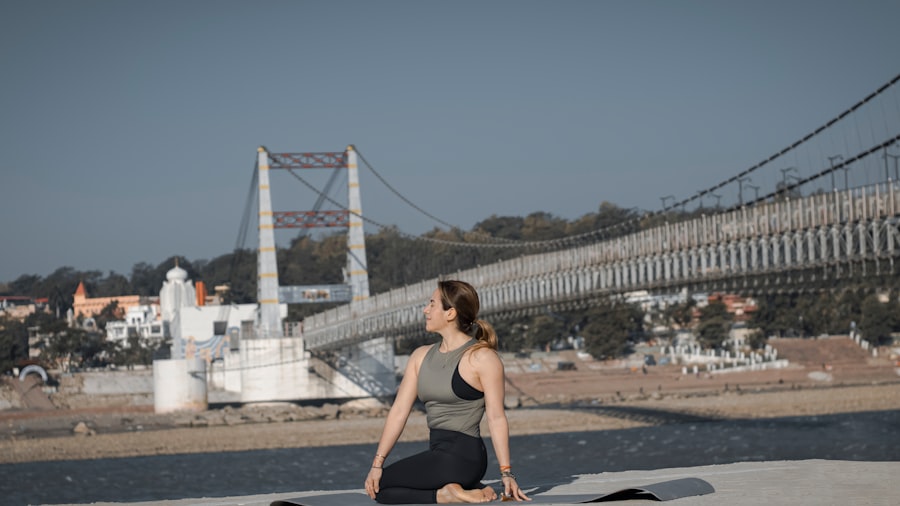
One common area of tension for office workers is the neck and shoulders. Sitting for long periods of time can lead to tightness and discomfort in these areas. Fortunately, there are several yoga poses that can help relieve neck and shoulder tension.
One simple pose to relieve neck tension is neck rolls. Sit up tall in your chair and drop your right ear towards your right shoulder. Slowly roll your head forward, bringing your chin towards your chest, then roll your head to the left, bringing your left ear towards your left shoulder. Continue this circular motion for a few breaths, then reverse the direction.
Shoulder shrugs are another effective pose for relieving tension in the shoulders. Sit up tall in your chair and inhale as you lift your shoulders up towards your ears. Exhale as you roll your shoulders back and down. Repeat this movement several times to release tension in the shoulders.
Cow face arms is a pose that targets both the neck and shoulders. Sit up tall in your chair and extend your right arm straight out in front of you. Bend your right elbow and reach your right hand towards the middle of your upper back. Extend your left arm out to the side, then bend your left elbow and reach your left hand towards the middle of your upper back. If possible, clasp your hands together behind your back. Hold this pose for a few breaths, then repeat on the other side.
Eagle arms is another pose that can help relieve tension in the neck and shoulders. Sit up tall in your chair and extend your arms out to the sides. Cross your right arm over your left arm, bringing your palms together if possible. Lift your elbows up towards shoulder height and draw your shoulder blades down your back. Hold this pose for a few breaths, then repeat on the other side.
How Yoga Breathing Techniques Can Help Calm the Mind and Increase Energy
In addition to physical poses, yoga also incorporates breathing techniques that can help calm the mind and increase energy levels. These techniques can be practiced right at your desk and have a profound impact on both mental and physical health.
One breathing technique that can help calm the mind is alternate nostril breathing. Sit up tall in your chair and place your left hand on your left knee. Bring your right hand up towards your face and use your thumb to close your right nostril. Inhale deeply through your left nostril, then use your ring finger to close your left nostril. Exhale through your right nostril. Inhale through your right nostril, then use your thumb to close it. Exhale through your left nostril. Continue this alternating pattern for a few minutes, focusing on the sensation of the breath.
Another breathing technique that can increase energy levels is ujjayi breath. Sit up tall in your chair and take a deep breath in through your nose. As you exhale, constrict the back of your throat slightly, creating a soft hissing sound. Continue this deep, slow breathing pattern for a few minutes, focusing on the sound and sensation of the breath.
Yoga Poses to Improve Circulation and Relieve Leg Cramps
Sitting for long periods of time can lead to poor circulation and leg cramps. Fortunately, there are several yoga poses that can help improve circulation and relieve leg cramps.
One simple pose to improve circulation is seated forward fold. Sit up tall in your chair and extend your legs out in front of you. Inhale as you lengthen your spine, then exhale as you hinge forward at the hips, reaching towards your toes. If possible, hold onto your feet or ankles. Hold this pose for a few breaths, then slowly come back up to a seated position.
Legs up the wall is another effective pose for improving circulation. Find a wall or sturdy surface and sit with one hip against the wall. Swing your legs up the wall and lie down on your back. Allow your arms to relax by your sides and close your eyes. Stay in this pose for a few minutes, focusing on deep breathing and relaxation.
Chair pose is a standing pose that can help improve circulation and relieve leg cramps. Stand tall with your feet hip-width apart and reach your arms overhead. Bend your knees and lower your hips down towards the floor, as if you were sitting back into an imaginary chair. Hold this pose for a few breaths, then slowly come back up to a standing position.
Warrior II is another standing pose that can improve circulation and relieve leg cramps. Stand tall with your feet wide apart and turn your right foot out to the side. Bend your right knee and extend your arms out to the sides, parallel to the floor. Gaze over your right fingertips and hold this pose for a few breaths, then repeat on the other side.
Tips for Incorporating Yoga into Your Daily Work Routine
Finding time to practice yoga during the workday can be challenging, but it’s important to prioritize self-care and set boundaries. Here are some tips for incorporating yoga into your daily work routine:
– Start small: Begin by setting aside just a few minutes each day to practice office yoga. Gradually increase the amount of time as you become more comfortable with the practice.
– Schedule it in: Treat your yoga practice like any other important appointment and schedule it into your calendar. This will help you prioritize self-care and ensure that you make time for it each day.
– Set boundaries: Communicate with your colleagues and let them know that you will be taking breaks throughout the day to practice yoga. Set boundaries and make it clear that this time is important for your physical and mental well-being.
– Find a buddy: Practicing yoga with a colleague can help keep you motivated and accountable. Find a buddy who is also interested in office yoga and schedule regular practice sessions together.
– Be flexible: If you’re unable to find time during the workday to practice yoga, consider incorporating it into your morning or evening routine. Even just a few minutes of yoga each day can have a positive impact on your physical and mental health.
Boosting Productivity and Well-Being with Office Yoga
In conclusion, office yoga is a simple and effective way to improve physical and mental health in the workplace. By incorporating simple yoga poses and stretches into our daily routine, we can improve posture, reduce stress, increase focus, and boost productivity. Taking breaks throughout the workday to stretch and move our bodies is crucial for overall well-being, as sitting for long periods of time can have negative effects on our physical and mental health.
By practicing office yoga, we can relieve tension in the neck and shoulders, improve circulation, increase energy levels, and calm the mind. It’s important to find time to incorporate yoga into our daily work routine, even if it’s just for a few minutes each day. By prioritizing self-care and setting boundaries, we can reap the numerous benefits of office yoga and improve our overall well-being in the workplace. So why not give it a try? Your body and mind will thank you.
Looking for more ways to improve your health and well-being at the office? Check out this article on essential remedies for vibrant health. From natural remedies to boost your immune system to tips for better sleep, this article covers it all. And if you’re interested in improving digestion, be sure to read this article on how to sip your way to better digestion. With these helpful tips and tricks, you’ll be able to create a healthier and more balanced lifestyle, even while working long hours in the office. So why not give it a try and incorporate some office yoga poses into your daily routine?