
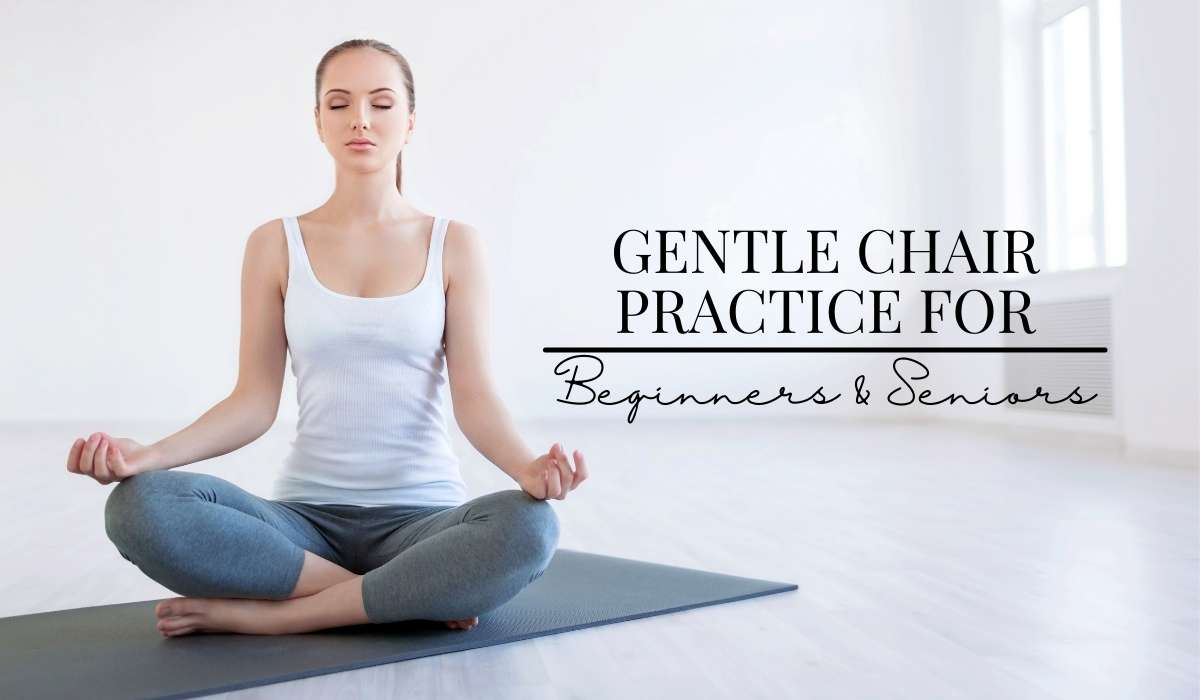

Gentle Chair Yoga is a modified form of yoga that is specifically designed for individuals with limited mobility or those who prefer to practice yoga while seated. It involves performing yoga poses and movements while sitting on a chair, making it accessible to people of all ages and fitness levels. Chair Yoga provides the same benefits as traditional yoga, such as improved flexibility, strength, and relaxation, but in a more accessible and supportive way.
The history of Chair Yoga can be traced back to the 1980s when it was developed by Lakshmi Voelker-Binder, a yoga teacher who wanted to make the practice more inclusive for individuals with physical limitations. Since then, Chair Yoga has gained popularity and is now widely practiced in senior centers, rehabilitation facilities, and community centers around the world.
Chair Yoga is particularly important for people with limited mobility because it allows them to experience the benefits of yoga without putting strain on their joints or risking injury. It provides a safe and supportive environment for individuals who may have difficulty getting up and down from the floor or maintaining balance in standing poses. By practicing yoga while seated, individuals with limited mobility can still improve their strength, flexibility, and overall well-being.
Benefits of Chair Yoga for Beginners & Seniors
1. Improved flexibility and range of motion: Chair Yoga helps to stretch and lengthen the muscles, improving flexibility and range of motion. The gentle movements and stretches performed in a seated position help to release tension in the body and increase joint mobility.
2. Increased strength and balance: Despite being seated, Chair Yoga poses can still help to build strength in the muscles. By engaging different muscle groups through various movements, individuals can improve their overall strength and stability. This is particularly beneficial for seniors who may be at risk of falls or have weakened muscles due to aging.
3. Reduced stress and anxiety: Like all forms of yoga, Chair Yoga incorporates deep breathing and relaxation techniques that help to calm the mind and reduce stress and anxiety. The slow and controlled movements, combined with focused breathing, promote a sense of relaxation and well-being.
4. Improved breathing and circulation: Chair Yoga emphasizes deep breathing, which helps to improve lung capacity and oxygenate the body. The gentle movements also help to stimulate blood flow and circulation, which can have a positive impact on overall health.
5. Enhanced overall well-being: Chair Yoga provides a holistic approach to wellness by addressing the physical, mental, and emotional aspects of health. Regular practice can lead to increased energy levels, improved mood, better sleep, and a greater sense of overall well-being.
How to Prepare for a Chair Yoga Practice
1. Choosing the right chair: When practicing Chair Yoga, it is important to choose a chair that is stable and supportive. Avoid chairs with wheels or armrests that may hinder movement. Opt for a chair with a straight back and a firm seat that allows you to sit with your feet flat on the floor.
2. Wearing comfortable clothing: It is important to wear loose-fitting and comfortable clothing that allows for ease of movement. Avoid wearing restrictive or tight clothing that may limit your range of motion.
3. Creating a peaceful environment: Find a quiet and peaceful space where you can practice without distractions. Dim the lights or use soft lighting to create a calming atmosphere. You may also want to play soft music or use essential oils to enhance the relaxation experience.
4. Setting intentions for the practice: Before beginning your Chair Yoga practice, take a moment to set an intention or focus for your practice. This could be anything from improving flexibility to reducing stress or simply taking time for self-care. Setting an intention helps to create a sense of purpose and mindfulness throughout your practice.
Chair Yoga Poses for Flexibility
| Chair Yoga Poses for Flexibility | Description | Benefits |
|---|---|---|
| Seated Forward Bend | Stretching the hamstrings and lower back while seated on a chair with legs extended forward. | Improves flexibility in the hamstrings and lower back, reduces stress and anxiety. |
| Seated Twist | Twisting the torso while seated on a chair, with one hand on the opposite knee and the other hand on the back of the chair. | Stretches the spine, improves digestion, and reduces back pain. |
| Chair Pigeon Pose | Placing one ankle on top of the opposite knee while seated on a chair, and gently pressing down on the raised knee. | Stretches the hips and glutes, improves flexibility in the lower body, and reduces tension in the hips and lower back. |
| Chair Cat-Cow Stretch | Alternating between arching the back and rounding the spine while seated on a chair, with hands on the knees. | Stretches the spine, improves posture, and reduces tension in the neck and shoulders. |
| Chair Warrior Pose | Extending one leg forward and bending the other knee while seated on a chair, with arms raised overhead. | Stretches the hips, thighs, and shoulders, improves balance, and strengthens the legs. |
1. Neck stretches: Sit tall in your chair with your feet flat on the floor. Gently tilt your head to the right, bringing your right ear towards your right shoulder. Hold for a few breaths and then repeat on the left side. This stretch helps to release tension in the neck and shoulders.
2. Shoulder rolls: Sit tall with your feet flat on the floor. Inhale as you lift your shoulders up towards your ears, and then exhale as you roll them back and down. Repeat this movement several times, allowing your shoulders to relax and release tension.
3. Seated forward fold: Sit towards the front edge of your chair with your feet hip-width apart. Inhale as you lengthen your spine, and then exhale as you hinge forward from the hips, reaching your hands towards the floor or resting them on your shins. Hold for a few breaths and then slowly come back up to a seated position.
4. Seated spinal twist: Sit tall with your feet flat on the floor. Inhale as you lengthen your spine, and then exhale as you twist to the right, placing your left hand on the outside of your right thigh and your right hand on the back of the chair. Hold for a few breaths and then repeat on the left side.
5. Seated side stretch: Sit tall with your feet flat on the floor. Inhale as you reach your right arm overhead, lengthening through the right side of your body. Exhale as you gently lean to the left, feeling a stretch along the right side of your body. Hold for a few breaths and then repeat on the other side.
Chair Yoga Poses for Strength
1. Seated leg lifts: Sit tall with your feet flat on the floor. Inhale as you lift one leg off the floor, extending it straight in front of you. Exhale as you lower it back down. Repeat on the other leg. This exercise helps to strengthen the muscles in the legs.
2. Seated squats: Sit towards the front edge of your chair with your feet hip-width apart. Inhale as you stand up, extending your arms in front of you. Exhale as you lower back down to a seated position. Repeat this movement several times, focusing on engaging the muscles in your legs and glutes.
3. Seated push-ups: Sit towards the front edge of your chair with your hands resting on the seat behind you, fingers pointing towards your body. Inhale as you bend your elbows, lowering your body towards the floor. Exhale as you push back up to a seated position. Repeat this movement several times, focusing on engaging the muscles in your arms and chest.
4. Seated bicep curls: Sit tall with your feet flat on the floor and a dumbbell or resistance band in each hand. Inhale as you curl your hands towards your shoulders, bending at the elbows. Exhale as you lower them back down. Repeat this movement several times, focusing on engaging the muscles in your biceps.
5. Seated tricep dips: Sit towards the front edge of your chair with your hands resting on the seat behind you, fingers pointing towards your body. Inhale as you bend your elbows, lowering your body towards the floor. Exhale as you push back up to a seated position. Repeat this movement several times, focusing on engaging the muscles in your triceps.
Chair Yoga Poses for Balance
1. Seated tree pose: Sit tall with your feet flat on the floor. Inhale as you lift one foot off the floor, placing the sole of your foot against the inside of your opposite thigh or calf. Exhale as you find your balance and hold for a few breaths. Repeat on the other side.
2. Seated eagle pose: Sit tall with your feet flat on the floor. Inhale as you cross your right thigh over your left thigh, wrapping your right foot around your left calf if possible. Exhale as you cross your right arm over your left arm, bringing your palms together. Hold for a few breaths and then repeat on the other side.
3. Seated half-moon pose: Sit tall with your feet flat on the floor. Inhale as you reach your right arm overhead, lengthening through the right side of your body. Exhale as you gently lean to the left, feeling a stretch along the right side of your body. Hold for a few breaths and then repeat on the other side.
4. Seated warrior III: Sit tall with your feet flat on the floor. Inhale as you lift one leg off the floor, extending it straight behind you. Exhale as you hinge forward from the hips, reaching your arms forward and keeping your back leg lifted. Hold for a few breaths and then repeat on the other side.
5. Seated dancer pose: Sit tall with your feet flat on the floor. Inhale as you lift one foot off the floor, bending at the knee and reaching back with one hand to hold onto your ankle or foot. Exhale as you gently kick into your hand, extending your leg behind you and reaching forward with your opposite arm. Hold for a few breaths and then repeat on the other side.
Chair Yoga Poses for Relaxation
1. Seated cat-cow stretch: Sit tall with your feet flat on the floor. Inhale as you arch your back, lifting your chest and looking up towards the ceiling. Exhale as you round your spine, tucking your chin towards your chest. Repeat this movement several times, focusing on the breath and the gentle movement of the spine.
2. Seated child’s pose: Sit towards the front edge of your chair with your feet hip-width apart. Inhale as you hinge forward from the hips, resting your chest on your thighs and reaching your arms forward. Exhale as you relax into the pose, allowing your body to release tension and find a sense of surrender.
3. Seated forward fold with arms resting on chair: Sit towards the front edge of your chair with your feet hip-width apart. Inhale as you lengthen your spine, and then exhale as you hinge forward from the hips, resting your arms on the back of the chair. Hold for a few breaths and then slowly come back up to a seated position.
4. Seated meditation: Sit tall with your feet flat on the floor and your hands resting on your thighs. Close your eyes and take a few deep breaths, allowing yourself to relax and let go of any tension or stress. Focus on your breath and bring your attention to the present moment.
Chair Yoga Modifications for Different Abilities
1. Using props such as blocks and straps: Props can be used to modify poses and make them more accessible for individuals with limited mobility. For example, a block can be placed under the hands in a seated forward fold to bring the floor closer to the individual, while a strap can be used to assist with reaching in poses such as seated side stretch.
2. Adjusting the height of the chair: The height of the chair can be adjusted to accommodate different abilities. For individuals who have difficulty getting up and down from a low chair, a higher chair or cushion can be used to provide additional support.
3. Offering seated and standing variations of poses: Chair Yoga can be modified to include both seated and standing variations of poses. This allows individuals with limited mobility to still participate in the practice and experience the benefits of yoga.
4. Providing options for those with injuries or chronic conditions: Chair Yoga can be adapted to meet the needs of individuals with injuries or chronic conditions. For example, individuals with knee or hip issues can perform seated versions of poses that would normally be done standing, while individuals with back pain can use the chair for support in poses such as seated forward fold.
Tips for Practicing Chair Yoga Safely
1. Listening to your body: It is important to listen to your body and only do what feels comfortable and safe for you. If a pose or movement causes pain or discomfort, modify it or skip it altogether.
2. Avoiding pain and discomfort: Chair Yoga should never cause pain or discomfort. If you experience any pain or discomfort during your practice, stop immediately and consult with a healthcare provider.
3. Modifying poses as needed: Chair Yoga poses can be modified to meet your individual needs and abilities. Don’t be afraid to make adjustments or use props to make the poses more accessible and comfortable for you.
4. Consulting with a healthcare provider before starting a new exercise routine: If you have any underlying health conditions or concerns, it is always a good idea to consult with a healthcare provider before starting a new exercise routine, including Chair Yoga.
Incorporating Chair Yoga into Daily Life
1. Practicing at home or in the office: Chair Yoga can be practiced anywhere, making it easy to incorporate into your daily life. Whether you’re at home or in the office, take a few minutes each day to practice some gentle stretches and movements in your chair.
2. Joining a Chair Yoga class: Joining a Chair Yoga class can provide additional guidance and support as you learn the poses and movements. It also offers an opportunity to connect with others who share similar interests and goals.
3. Using Chair Yoga as a warm-up or cool-down for other activities: Chair Yoga can be used as a warm-up or cool-down for other activities such as walking, swimming, or strength training. It helps to prepare the body for movement and can also aid in recovery and relaxation after physical activity.
4. Making Chair Yoga a regular part of your self-care routine: Just like any other form of exercise or self-care practice, consistency is key. Make Chair Yoga a regular part of your self-care routine by setting aside time each day or week to practice. This will help you to experience the full benefits of the practice and make it a sustainable habit.
In conclusion, Gentle Chair Yoga is a modified form of yoga that is accessible to individuals with limited mobility or those who prefer to practice yoga while seated. It offers numerous benefits for beginners and seniors, including improved flexibility, strength, balance, reduced stress and anxiety, and enhanced overall well-being. By following the tips for preparing and practicing safely, individuals can incorporate Chair Yoga into their daily lives and experience the transformative effects of this gentle and accessible form of exercise.
If you’re interested in gentle chair yoga for beginners and seniors, you may also want to explore the benefits of healthy exercise for mental health. In a related article, “The Connection Between Exercise and Mental Well-being,” you can discover how physical activity can positively impact your mental state and overall well-being. From reducing stress and anxiety to boosting mood and self-esteem, incorporating exercise into your routine can have profound effects on your mental health. To learn more about this topic, check out the article here.